Rotary Screw Air Compressor Price What Determines the Cost
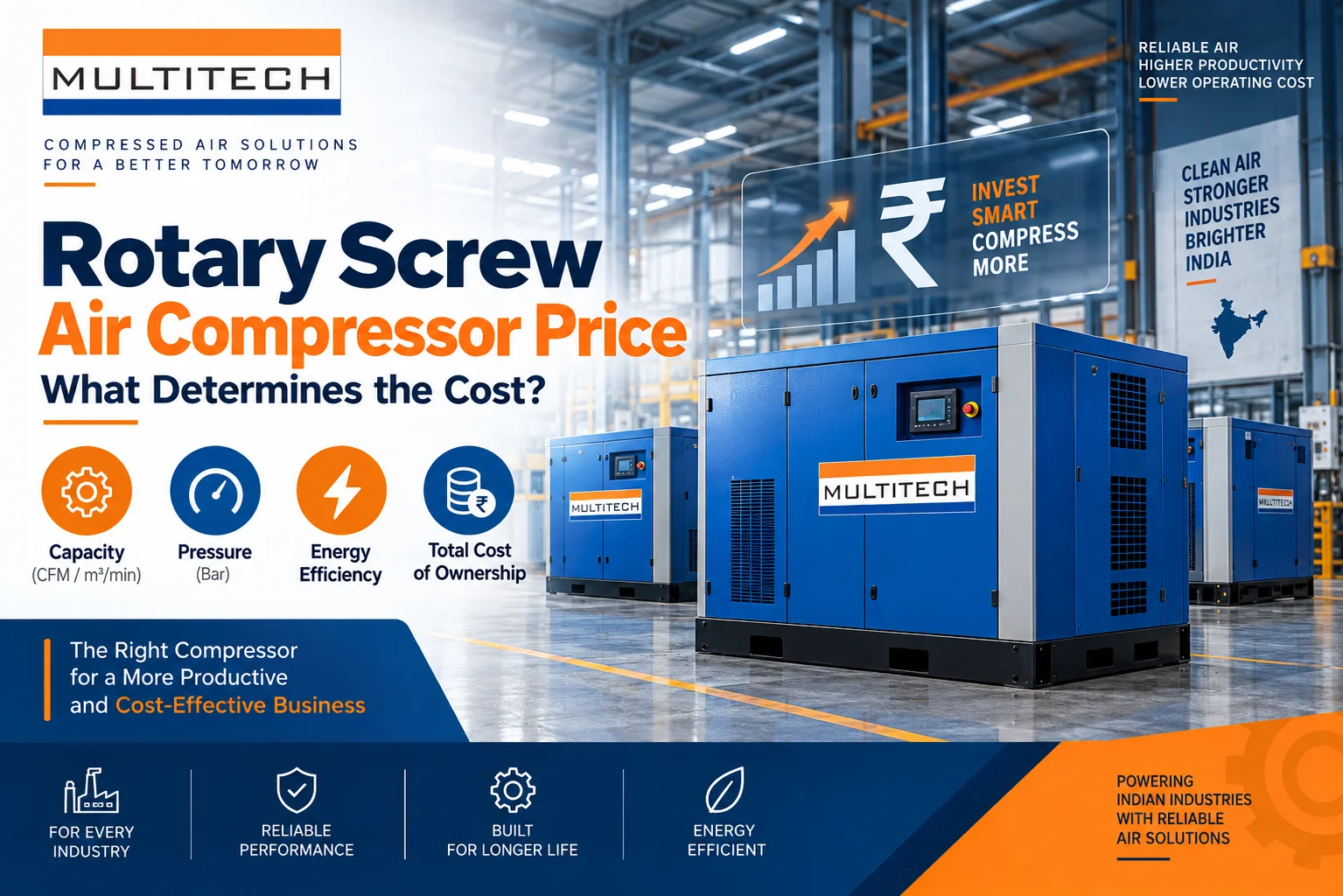
The rotary screw air rotary compressor price can start at approximately ₹15,000 to ₹40,000 for small portable or basic reciprocating units. Industrial reciprocating compressors commonly fall between ₹60,000 and ₹4 lakh, depending on horsepower, tank size and pressure. Rotary screw compressors generally start around ₹2 lakh for smaller industrial models and can cross ₹20 lakh for higher-capacity, variable-speed or complete compressed-air systems. Oil-free, high-pressure PET and application-specific compressors can cost more because they use specialised compression stages, controls and air-treatment equipment.
These figures are indicative buying ranges, not fixed price promises. A correct quotation depends on the required flow in CFM or m³/min, working pressure in bar, duty cycle, air quality, power supply, receiver, dryer, filters, piping, installation and taxes. The lowest rotary compressor price may be unsuitable if it cannot maintain pressure during production or consumes more electricity over its working life.
Why rotary compressor prices vary so much
Two machines with the same horsepower may deliver different air volumes, operate at different pressures and have different energy consumption. Horsepower describes motor size; it does not by itself tell you how much usable compressed air the machine will produce. Buyers should compare FAD, or free air delivery, at the specified pressure along with motor efficiency and control method.
The compressor package also changes the screw compressor cost. A bare compressor is different from a complete package with a receiver tank, aftercooler, moisture separator, refrigeration dryer, line filters, auto drain, starter panel and installation. Ask every supplier to state what is included so that quotations are genuinely comparable.
Indicative air rotary compressor price ranges in India
The following table is useful for initial budgeting. Actual prices vary by brand, specifications, material, automation, warranty, delivery location and market conditions. Treat the ranges as a screening tool before technical discussion.
| Compressor type | Typical size or use | Indicative price range |
|---|---|---|
| Portable reciprocating | 0.5–3 HP, workshop and light-duty use | ₹15,000–₹60,000 |
| Industrial reciprocating | 5–25 HP, intermittent or medium duty | ₹70,000–₹4 lakh |
| Oil-free reciprocating | Clean-air applications, small to medium duty | ₹40,000–₹3 lakh |
| Rotary screw | 7.5–30 HP, continuous industrial operation | ₹2–₹7 lakh |
| Large rotary screw | 40–250 HP, plants with high demand | ₹8–₹30 lakh or more |
| Oil-free screw or scroll | Pharma, food, electronics and critical air | ₹5–₹35 lakh or more |
| High-pressure PET compressor | Preform and bottle blowing | ₹8–₹50 lakh or more |
| Complete compressed-air system | Compressor, dryer, receiver, filters and accessories | ₹3–₹40 lakh or more |
Rotary screw air compressor price by configuration
Reciprocating air rotary compressor price
Reciprocating, or piston, compressors are often the most accessible option for workshops, garages, fabrication units, small factories and applications that do not require continuous air delivery. Their price depends on direct-drive or belt-drive construction, single-stage or two-stage compression, tank volume, motor rating, pressure switch, pump material and cooling arrangement. A small single-phase model may fit a modest budget, while a heavy-duty two-stage machine with a larger receiver and aftercooler can cost several lakh rupees.
A piston compressor is not automatically the right choice because its purchase price is lower. It normally produces pulsating airflow and needs rest periods in many applications. If the plant consumes air throughout a shift, compare the lifecycle cost and service requirement with a rotary screw compressor.
Rotary screw rotary compressor price
Rotary screw compressors are built for stable, continuous compressed-air supply. Their industrial screw rotary compressor price is influenced by motor power, airend design, pressure rating, fixed-speed or variable-speed drive, controller, cooling system and enclosure. A 7.5 or 10 HP model may suit a small production line, while a plant with several high-demand machines may need a larger unit or multiple compressors operating in sequence.
Variable-speed drive models can cost more initially, but they may reduce energy waste when demand changes during the day. The business case depends on the load profile, operating hours and electricity tariff. A fixed-speed model can remain sensible where demand is steady and the machine runs close to full load for most of the shift.
Oil-free rotary compressor price
Oil-free compressors are selected when even small quantities of oil contamination can affect the product, process or compliance requirement. They are used in pharmaceuticals, food and beverage, medical facilities, laboratories, electronics, dental applications and certain packaging operations. Oil-free reciprocating, scroll, screw and high-pressure designs have different prices and operating characteristics.
Do not compare an oil-free machine only with a lubricated compressor of the same horsepower. Check the required air-quality class, dryer and filtration arrangement, temperature conditions, service interval and validated process requirements. In some applications, the cost of protecting the product from contamination is more important than the initial rotary compressor price.
High-pressure PET rotary compressor price
PET bottle production uses high-pressure air for preform and bottle blowing. The compressor package may include a low-pressure stage, high-pressure booster, inter-coolers, aftercooler, receiver, dryer and controls. Its price is therefore determined by pressure, bottle output, preform size, cycle time, air quality and redundancy requirements. A normal workshop compressor should not be substituted for a PET system simply because its quoted price is lower.
What is included in a screw compressor quotation
A useful quotation should identify the compressor model, motor power, rated pressure, FAD, receiver size, electrical details, cooling method, dimensions, weight, warranty and delivery terms. It should also list exclusions. Ask whether GST, freight, unloading, foundation, cable, piping, commissioning, dryer, filters, oil, spare parts and operator training are included.
For a fair industrial comparison, request a line-item quote. One supplier may offer a low rotary compressor price with no dryer or installation, while another may include a complete ready-to-run package. Both prices can be correct, but they do not represent the same scope.
Main factors that affect screw compressor cost
1. Air delivery and pressure
A higher pressure requirement usually needs more compression work and may reduce the delivered flow. Size the machine for the actual working pressure, not an unnecessarily high maximum rating.
2. Operating hours
A machine used for one hour a day has a different cost case from one running two or three shifts. Long operating hours make energy efficiency, cooling and service support more important.
3. Duty cycle
Intermittent demand may suit a reciprocating compressor. Continuous demand often favours a rotary screw package because it provides steadier air and better control.
4. Air quality
Oil-free compression, dryers, sterile filters and condensate treatment increase the initial investment but may be necessary for the process.
5. Motor and controls
Premium motors, soft starters, intelligent controllers and variable-speed drives affect the price. They can also influence energy use and operating stability.
6. Receiver tank
A receiver stores air, reduces pressure fluctuation and helps manage short demand peaks. Tank capacity should match the compressor, pressure regulations and application.
7. Environment
High ambient temperature, dust, humidity and poor ventilation can require stronger cooling, filtration or room modifications.
8. Service and spares
Genuine filters, separator elements, lubricants, valves and planned maintenance should be considered before choosing a supplier.
9. Delivery and installation
Freight, unloading equipment, foundations, electrical work, piping and commissioning can materially change the installed screw compressor cost.
10. Taxes and finance
GST, payment terms, financing charges and warranty conditions affect the amount paid by the business, even when the base rotary compressor price looks attractive.
How to calculate rotary screw compressor capacity
Start by listing every air-consuming machine. Record each machine’s pressure requirement, air consumption, operating schedule and whether the figure is continuous or intermittent. Convert all figures to the same unit, such as CFM or m³/min. Add the demand of machines that can operate at the same time, then allow a measured and reasonable margin for leakage and future expansion.
Avoid adding a large arbitrary margin. Oversizing can cause inefficient cycling, higher purchase cost and poor control. Undersizing causes pressure drops, production interruptions and excessive compressor loading. A site survey, flow measurement or temporary data logger can produce a better result than guessing from motor horsepower.
The target pressure should be based on the equipment that needs the highest pressure, plus the pressure loss through dryers, filters, piping and elevation. Raising compressor discharge pressure to compensate for leaks is expensive. Fix leaks and review pipe sizing before buying a larger machine.
Purchase price versus total cost of ownership
Electricity is often the largest cost over an industrial compressor’s life. The total cost of ownership includes the initial rotary compressor price, electricity, maintenance, consumables, downtime, air treatment, installation and eventual replacement. A machine with a higher purchase price may be economical if it delivers the required air with lower specific power and remains reliable under the plant’s real load.
Ask the supplier for an operating-cost estimate based on your hours, tariff and load profile. Check the assumptions. A brochure efficiency figure may not represent the machine at your actual pressure, ambient temperature or part-load condition. Compare like-for-like data and keep the calculations with the purchase file.
Which rotary screw compressor configuration is right
| Application | Often suitable starting point | What to verify |
|---|---|---|
| Workshop and service bay | Portable or reciprocating | Peak tool demand, receiver size and noise |
| Fabrication and general manufacturing | Two-stage reciprocating or rotary screw | Shift hours, blast or tool demand and pressure stability |
| Packaging and printing | Rotary screw with dryer and filters | Clean air, continuous flow and pressure variation |
| Pharma and food processing | Oil-free compressor with suitable treatment | Required air-quality class and validation needs |
| PET bottle production | High-pressure compressor and booster system | Bottle output, pressure, air quality and redundancy |
| Dental or laboratory use | Silent oil-free reciprocating or scroll | Noise, purity, dew point and standby needs |
Common mistakes that increase screw compressor cost
The first mistake is selecting by horsepower alone. The second is comparing only the base machine price and discovering later that the dryer, receiver or installation is extra. The third is buying a compressor that produces the wrong pressure or flow. Other avoidable problems include ignoring leakage, placing the compressor in a hot dusty room, skipping preventive maintenance and choosing a supplier without accessible service or spares.
A fourth mistake is treating the compressor as a standalone machine. Air quality, pipe size, receiver volume, drainage and point-of-use filtration all affect the result. The right package can cost more at the start but protect production quality and reduce avoidable operating losses.
How to compare rotary screw compressor suppliers in India
Choose a supplier that asks technical questions before quoting. The discussion should cover application, pressure, flow, duty cycle, air quality, site conditions and future expansion. Review the company’s manufacturing capability, product range, documentation, warranty, service response, spare-parts availability and delivery coverage. Ask for a clear scope sheet instead of relying on a single headline number.
Multitech Compressors is based in Faridabad and supplies compressor solutions across India. Its range includes compressors, air dryers and filters for different industrial requirements. Buyers can use the company’s product and technical discussions to match compressor type with the application instead of treating “best price” as the only selection criterion. Visit the [Multitech Compressors].
Questions to ask before requesting a quote
- What air delivery will the compressor provide at my required pressure?
- Is the quoted price for the compressor only or a complete package?
- Does the price include GST, freight, installation and commissioning?
- Which dryer and filters are required for my process?
- What are the recommended service intervals and consumables?
- Is a variable-speed model justified by my load profile?
- What warranty is offered and what does it exclude?
- Can the supplier support my location with service and spare parts?
Frequently asked questions
1. What is the average rotary screw air rotary compressor price?
Small portable and reciprocating compressors may cost about ₹15,000 to ₹60,000. Industrial reciprocating units can range from ₹70,000 to ₹4 lakh, while rotary screw packages commonly start around ₹2 lakh and rise with capacity. These are indicative ranges; the final quotation depends on flow, pressure, configuration, brand, taxes, freight and installation.
2. What is the screw compressor cost for a 5 HP machine?
A 5 HP compressor may cost roughly ₹40,000 to ₹1.5 lakh depending on whether it is portable, reciprocating, oil-free, tank-mounted or configured for industrial duty. Ask for delivered air capacity and working pressure because two 5 HP machines can have different performance and prices.
3. How much does a 10 HP rotary screw compressor cost?
A 10 HP industrial compressor may fall broadly between ₹1 lakh and ₹3 lakh for reciprocating or smaller rotary screw configurations. The screw compressor cost can increase when a dryer, receiver, filters, automation, installation or special air-quality requirement is added.
4. What is the industrial screw rotary compressor price for a rotary screw model?
Smaller rotary screw compressors may begin around ₹2 lakh, while larger, variable-speed, high-pressure or complete packaged systems can cost substantially more. The correct industrial screw rotary compressor price should be compared at the same FAD, pressure, accessories and warranty scope.
5. Is a rotary screw compressor better than a reciprocating compressor?
Neither is universally better. Reciprocating compressors suit intermittent demand and lower budgets. Rotary screw compressors are usually considered for continuous operation, stable pressure and higher production demand. Operating hours, duty cycle, noise, maintenance and lifecycle cost should guide the decision.
6. Does a higher HP compressor always deliver more air?
Not necessarily. Delivered air depends on compressor design, pressure, efficiency, speed and operating conditions. Compare FAD at the required pressure instead of selecting only by motor horsepower.
7. Does the listed rotary compressor price include GST?
Not always. Online and catalogue prices may exclude GST, freight, unloading, installation or accessories. Ask the supplier for a written breakup so the final payable amount is clear.
8. How much does an air dryer add to the compressor cost?
The addition depends on flow, pressure, dew point and dryer type. A small refrigeration dryer costs less than a large desiccant or heatless dryer. Filters, auto drains and installation may also be required, so price the entire air-treatment package.
9. Should I buy an oil-free compressor for every application?
No. Oil-free compression is important where contamination can harm the product or process. For general workshop and manufacturing use, a correctly maintained lubricated compressor may be suitable. The selection should follow the required air-quality standard and process risk.
10. How can I reduce the running cost of an air compressor?
Repair leaks, maintain filters, keep the compressor room cool and ventilated, use the correct pressure, avoid unnecessary idle running and schedule preventive maintenance. If demand varies significantly, evaluate sequencing or a variable-speed compressor using actual operating data.
11. What receiver tank size do I need?
Receiver size depends on compressor capacity, pressure range, demand fluctuations, control method and regulations. A supplier should size the tank with the complete system rather than using a generic tank recommendation.
12. How often does an industrial air compressor need maintenance?
The interval depends on compressor type, operating hours, environment and manufacturer instructions. Routine checks may include filters, oil or lubricant, belts, drains, coolers, separator elements, electrical connections and safety devices. Follow the model-specific maintenance schedule.
13. Can Multitech Compressors supply air compressors outside Faridabad?
Yes. Multitech Compressors is based in Faridabad and supplies compressor products and related equipment across India. Delivery, installation and service arrangements should be confirmed for the buyer’s specific location and project scope.
14. How do I get an accurate rotary compressor price?
Share the application, required pressure, air consumption, operating hours, power supply, air-quality requirement, location and preferred delivery timeline. A complete technical brief allows the supplier to recommend a suitable machine and quote the required accessories instead of giving a misleading headline price.
Final buying advice
The right rotary screw air rotary compressor price is the amount paid for a machine that delivers the required air reliably, safely and economically over its working life. Start with measured demand, compare FAD at the same pressure, define the complete scope and include air treatment, installation, maintenance and energy in the decision. If you are comparing rotary compressor price options for a plant, share your technical requirement with Multitech Compressors for a more accurate recommendation and quotation.





-
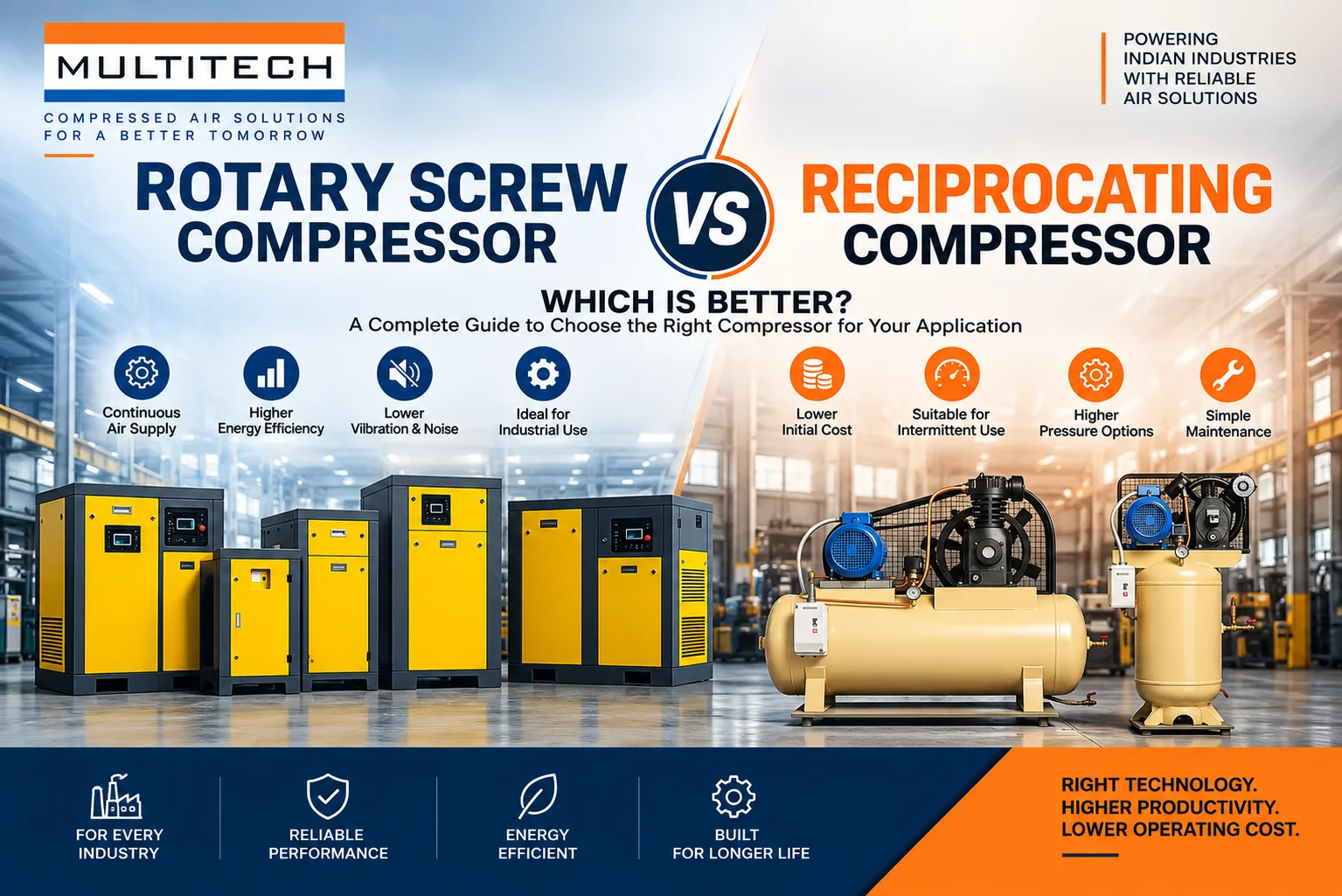
Rotary Screw vs Reciprocating Compressor: Which Is Better?
-
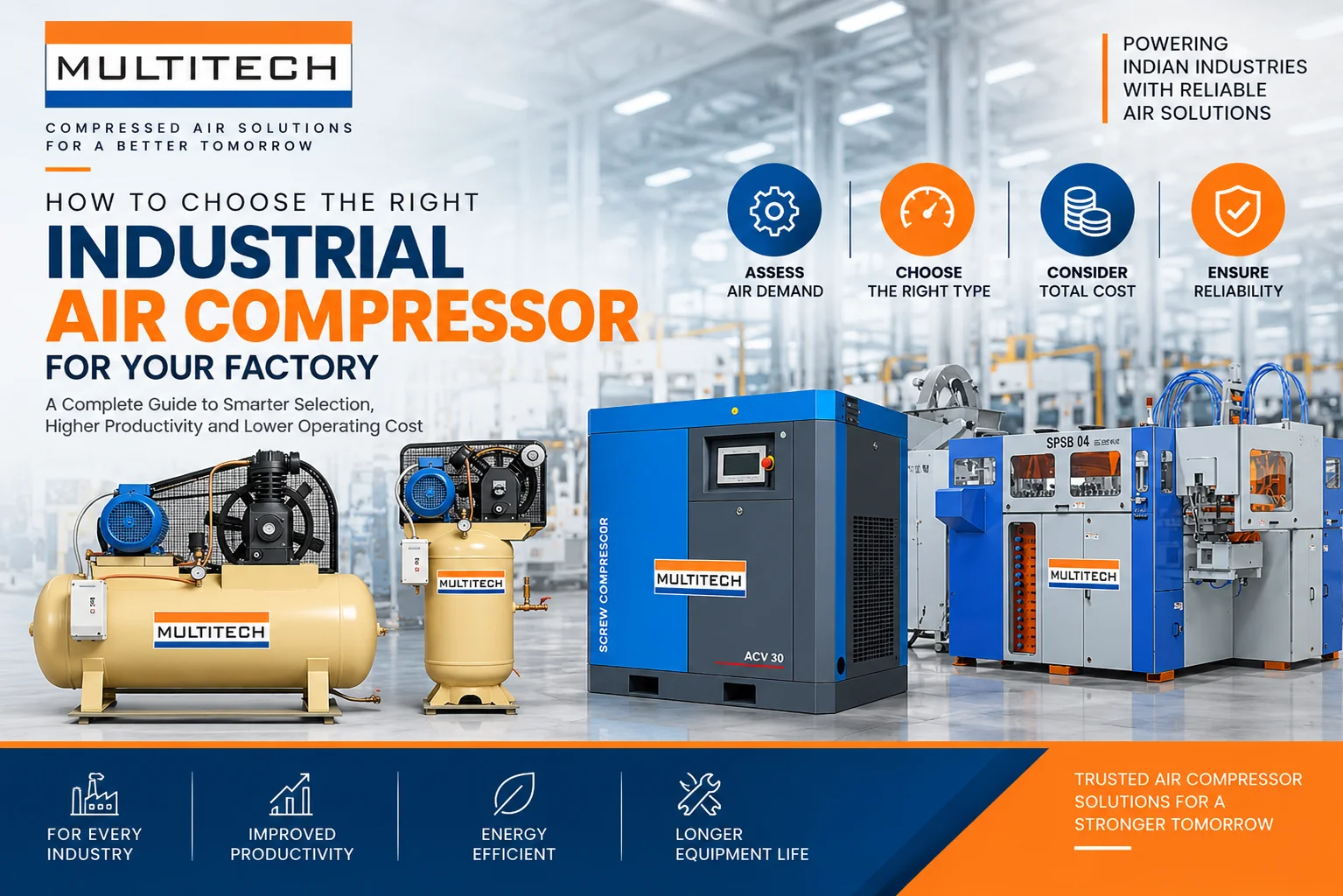
How to Choose the Right Industrial Air Compressor for Your Factory
-
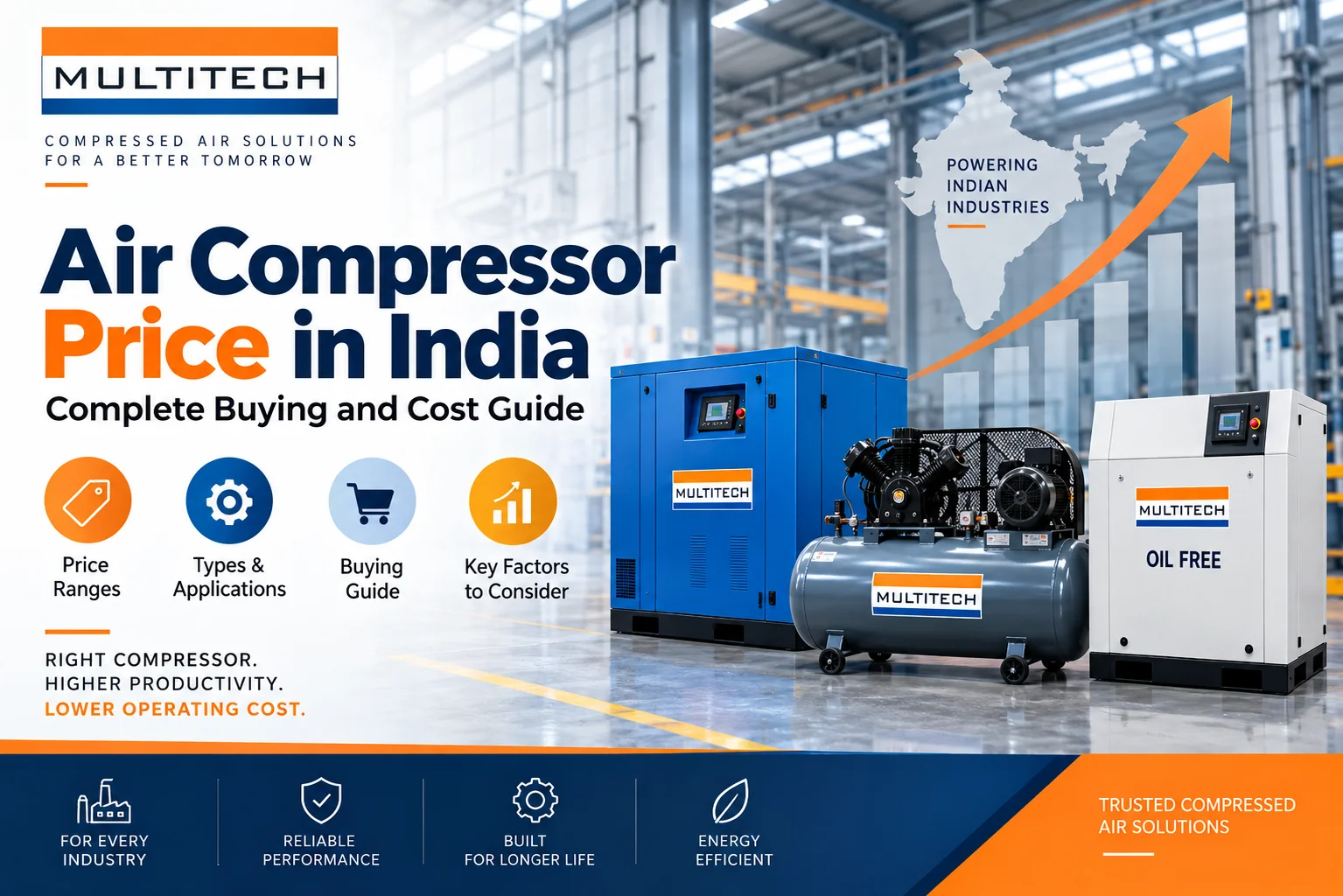
Air Compressor Price in India Complete
-
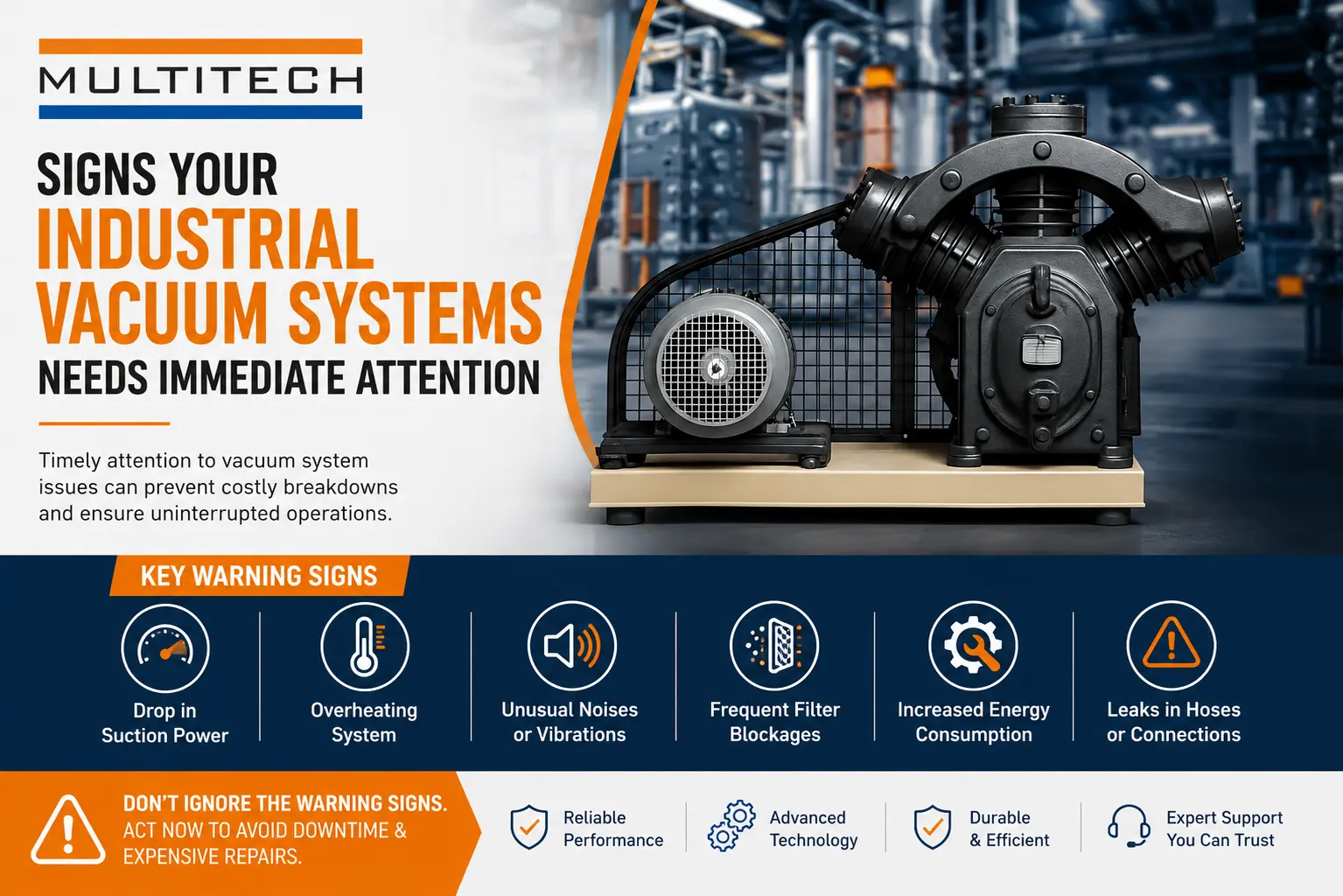
Signs Your Industrial Vacuum Systems Needs Immediate Attention
-
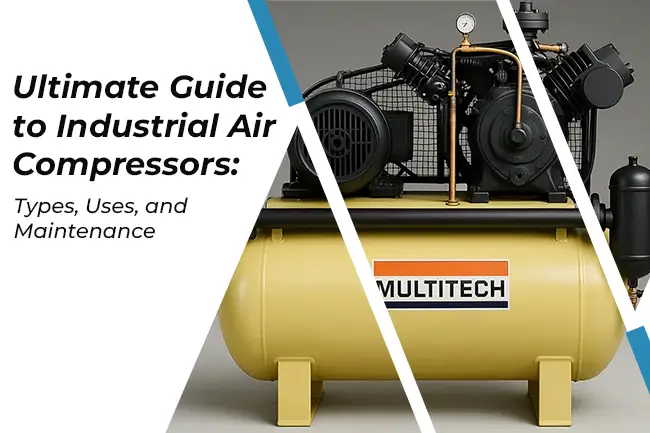
Ultimate Guide to Industrial Air Compressors: Types, Uses, and Maintenance Tips