Signs Your Industrial Vacuum Systems Needs Immediate Attention
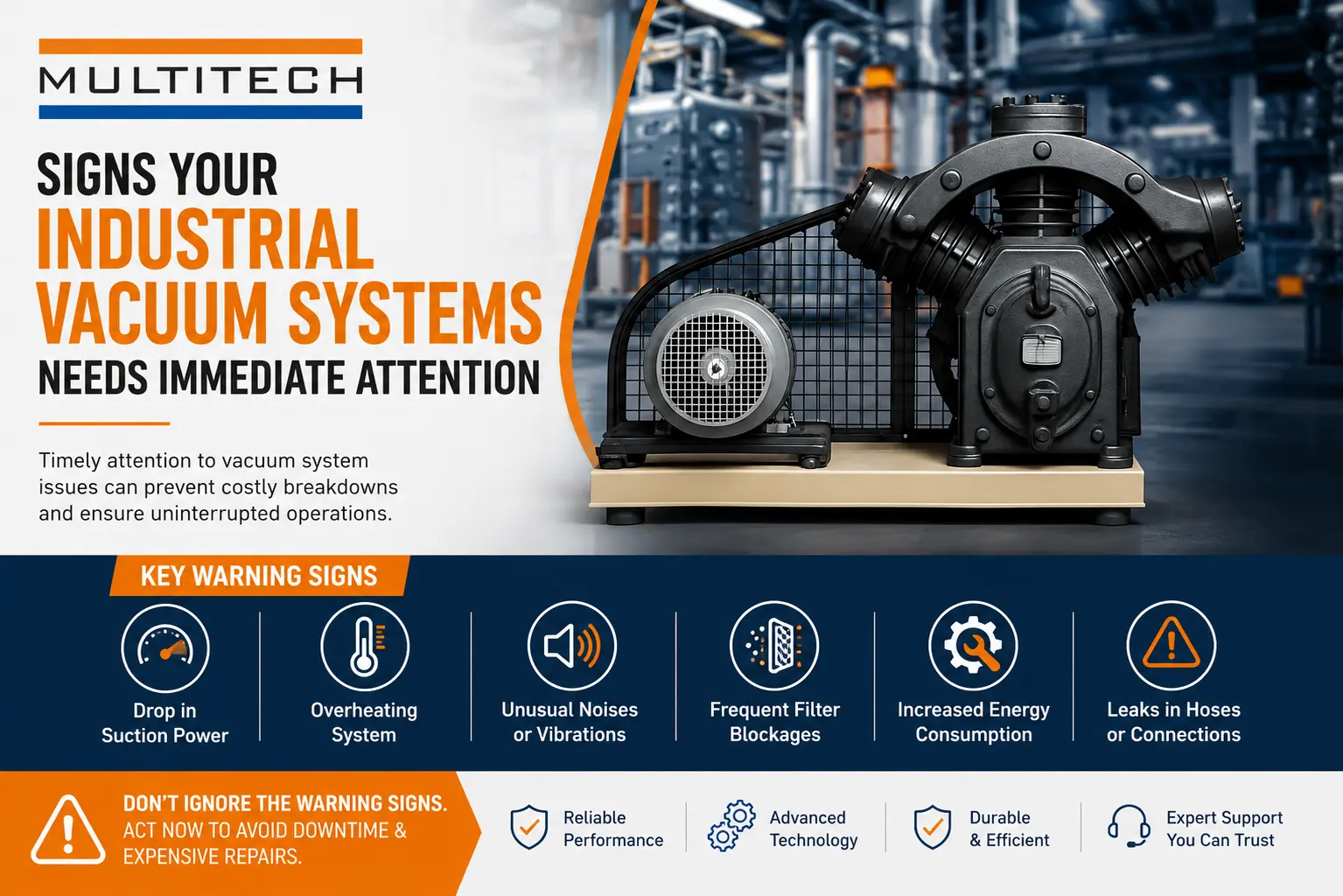
Industrial facilities rarely fail because of one dramatic event. More often, problems build gradually vibration increases slightly, operating temperatures drift upward, evacuation cycles slow down, or maintenance intervals become shorter than expected. In many production environments, these signals are easy to overlook until they begin affecting process stability.
That pattern is particularly common in facilities using dry vacuum pumps alongside refrigeration and gas-handling systems linked to Ammonia Compressors. Since these systems often operate in demanding industrial conditions, early intervention becomes less about emergency repair and more about maintaining process continuity, energy efficiency, and equipment longevity.
In recent years, manufacturers across food processing, pharmaceuticals, chemicals, packaging, and process engineering sectors have placed greater emphasis on predictive maintenance. Procurement teams are no longer evaluating industrial vacuum systems solely by initial cost. They are increasingly assessing operational consistency, contamination control, thermal stability, and long-term reliability under varying load conditions.
This shift reflects a broader industrial reality: downtime rarely originates from a single component. It usually emerges from small inefficiencies spreading across interconnected systems.
Industry Context & Market Positioning
Industrial vacuum systems have evolved significantly from conventional oil-sealed configurations toward dry-running technologies designed for cleaner and lower-maintenance operation. In facilities where contamination control, process precision, or continuous operation matter, dry vacuum systems are often integrated with automation infrastructure and centralized monitoring platforms.
Facilities using ammonia-based refrigeration or gas compression environments frequently encounter challenging operating conditions:
- Fluctuating thermal loads
- Moisture exposure
- Particulate contamination
- Aggressive process gases
- Continuous-duty operational cycles
Under such conditions, even minor deviations in vacuum performance can affect upstream and downstream equipment.
Many procurement teams initially focus on pump capacity or energy ratings. Yet operational experience often reveals that durability, internal tolerances, rotor stability, heat dissipation, and material compatibility influence lifecycle performance more significantly than headline specifications alone.
Manufacturers such as Multitech Compressors, operating from Faridabad with Pan-India supply capability, often see that industrial buyers are becoming more cautious during evaluation stages. Instead of replacing systems only after failure, many facilities are moving toward condition-based maintenance planning.
This reflects a practical shift in industrial thinking: preventing instability is usually less expensive than recovering from interrupted production.
What Is an Industrial Dry Vacuum System?
An industrial dry vacuum system is a vacuum-generating system that operates without oil or liquid inside the compression chamber. It removes gases, vapors, or air using precision-engineered rotating components while minimizing contamination risks and reducing maintenance requirements.
In industrial environments associated with Ammonia Compressors, dry vacuum systems are commonly used where process cleanliness, thermal stability, and continuous-duty performance are important. Their design allows reduced process contamination compared to conventional lubricated vacuum technologies.
Industrial dry vacuum pumps are mechanical systems designed to create vacuum pressure through non-contact compression mechanisms. Because internal components operate with tight tolerances and minimal frictional contact, these systems are widely used in manufacturing applications requiring controlled evacuation and low process contamination.
Technical Specifications & Key Features
Although configurations vary across industries, several technical parameters strongly influence system behavior.
Specification Area |
Operational Importance |
|
Pumping Speed |
Determines evacuation efficiency |
|
Ultimate Vacuum Level |
Influences process precision |
|
Motor Efficiency |
Impacts long-term energy consumption |
|
Rotor Clearance |
Affects wear resistance and thermal stability |
|
Cooling Method |
Supports continuous-duty performance |
|
Noise & Vibration Levels |
Indicates internal mechanical condition |
|
Material Compatibility |
Important for chemical and gas exposure |
One commonly misunderstood issue is that higher pumping capacity does not automatically translate into better operational performance. In facilities with inconsistent load cycles, oversized systems may experience inefficient cycling, unnecessary energy consumption, and accelerated wear.
Another operational factor involves temperature stability. Excessive internal heat often signals problems related to airflow restriction, bearing wear, contamination buildup, or imbalance within rotating assemblies.
Over time, these conditions can affect associated systems connected to Ammonia Compressors and refrigeration infrastructure.
Early warning indicators often include:
- Slower vacuum response
- Abnormal vibration patterns
- Elevated motor current
- Irregular discharge temperatures
- Increased maintenance frequency
- Unstable pressure readings
In many facilities, these symptoms emerge gradually rather than simultaneously.
Materials & Production Methodology
Material selection plays a substantial role in vacuum system durability.
Industrial dry vacuum pumps commonly incorporate:
- Cast iron housings for structural rigidity
- Stainless steel internal components for corrosion resistance
- Aluminum alloy cooling sections for thermal management
- Precision-machined rotors for controlled clearances
- High-grade bearings for continuous rotational stability
The manufacturing methodology itself significantly affects long-term performance consistency.
Rotor balancing, machining tolerances, shaft alignment, and surface finishing all influence operational smoothness. Even small deviations during production can affect vibration levels and bearing life after extended industrial use.
Facilities operating under harsh industrial conditions especially those involving dust, vapor exposure, or temperature fluctuations tend to expose manufacturing weaknesses faster than laboratory testing environments.
This is one reason why procurement engineers increasingly evaluate manufacturing capability rather than focusing only on catalog specifications.
Companies with established production and distribution infrastructure, including suppliers operating across industrial regions listed on the our presence network, are often evaluated not only for product availability but also for technical support continuity and replacement accessibility.
Performance & Durability Insights
Most industrial vacuum systems do not deteriorate suddenly. Performance degradation usually begins with efficiency drift.
A system that once achieved stable vacuum levels quickly may begin requiring longer evacuation cycles. Operators may compensate temporarily by extending operating hours or increasing cycle frequency. While this may appear manageable initially, it often places additional stress on motors, bearings, and seals.
Several operational conditions accelerate wear:
- Prolonged high-temperature operation
- Contaminated intake environments
- Moisture intrusion
- Inadequate filtration
- Improper alignment
- Inconsistent maintenance intervals
In systems associated with Ammonia Compressors, thermal fluctuations can become particularly important. Temperature instability affects internal clearances and may gradually reduce compression efficiency.
One overlooked issue in industrial facilities is vibration normalization. Operators working around rotating machinery daily may become accustomed to increasing vibration or noise levels over time. However, subtle mechanical instability often precedes significant component failure.
Common signs requiring immediate attention include:
Rising Energy Consumption
An increase in power draw without corresponding process demand often indicates internal inefficiency or airflow restriction.
Frequent Overheating
Consistent thermal alarms may signal inadequate cooling, bearing degradation, or internal contamination.
Reduced Vacuum Stability
Pressure fluctuation during operation can point toward wear-related leakage or rotor imbalance.
Unusual Noise Patterns
Grinding, metallic contact, or inconsistent sound signatures frequently indicate alignment or bearing problems.
Increased Maintenance Frequency
When servicing intervals shorten unexpectedly, the underlying issue may involve broader mechanical degradation rather than isolated component failure.
Industrial maintenance teams increasingly rely on trend monitoring because catastrophic failures often originate from patterns visible weeks or months earlier.
Applications & Use Environments
Dry vacuum systems linked to Ammonia Compressors are used across a wide range of industrial environments.
Typical application sectors include:
- Food processing plants
- Pharmaceutical manufacturing
- Packaging operations
- Chemical processing facilities
- Refrigeration systems
- Electronics manufacturing
- Plastics processing units
- Automated production lines
Each environment introduces different operational challenges.
For example:
- Food processing facilities often prioritize contamination control
- Chemical plants emphasize corrosion resistance
- Packaging systems require stable cycling performance
- Refrigeration applications demand thermal reliability
Environmental conditions also matter considerably.
Dust-heavy facilities may require advanced filtration systems, while moisture-prone environments may prioritize corrosion-resistant materials and condensate management.
In modern manufacturing plants, vacuum systems are increasingly integrated with automation and monitoring platforms. This integration allows predictive diagnostics, operational trend analysis, and earlier identification of performance drift.
Dry Vacuum Pumps vs Conventional Oil-Sealed Systems
Selecting between dry and oil-sealed systems depends heavily on application priorities rather than generalized performance assumptions.
Factor |
Dry Vacuum Pumps |
Oil-Sealed Systems |
|
Process Cleanliness |
Higher |
Moderate |
|
Maintenance Requirements |
Lower routine lubrication needs |
Regular oil servicing |
|
Contamination Risk |
Reduced |
Higher potential |
|
Initial Cost |
Typically higher |
Often lower |
|
Continuous Operation Stability |
Strong in controlled conditions |
Good for certain heavy-duty applications |
|
Chemical Compatibility |
Often better for sensitive processes |
Depends on lubricant interaction |
Neither technology is universally superior.
Facilities handling contamination-sensitive processes frequently prefer dry systems, while some heavy industrial environments may still rely on oil-sealed alternatives for specific operational conditions.
The most suitable choice usually depends on process stability requirements, maintenance infrastructure, operating environment, and lifecycle expectations.
Buyer Evaluation Checklist
Before selecting or servicing an industrial vacuum system, procurement and engineering teams often evaluate several operational factors.
Technical Evaluation Checklist
- Is the vacuum level appropriate for the actual process requirement?
- Are materials compatible with process gases or environmental exposure?
- Is the cooling mechanism adequate for continuous operation?
- Are vibration and noise levels within stable operational limits?
- Does the manufacturer provide replacement accessibility across regions?
- Are maintenance intervals realistic for the operating environment?
- Is the system compatible with automation or monitoring infrastructure?
- Are spare components standardized and available locally?
One recurring procurement challenge is prioritizing initial purchase cost over operational stability. In many industrial environments, lifecycle reliability ultimately carries greater financial importance than short-term savings.
Frequently Asked Questions
1. What are the early signs of industrial vacuum pump failure?
Common warning signs include increased vibration, overheating, reduced vacuum stability, unusual operating noise, higher energy consumption, and slower evacuation cycles. These symptoms often appear gradually before major mechanical failure occurs.
2. Why are dry vacuum pumps used with Ammonia Compressors?
Dry vacuum pumps are often preferred because they reduce contamination risks, support cleaner operation, and provide reliable vacuum performance in industrial refrigeration and gas-handling environments.
3. How often should industrial vacuum systems be inspected?
Inspection frequency depends on operating conditions, contamination exposure, and duty cycle. Continuous industrial applications generally require routine monitoring for vibration, temperature, pressure stability, and airflow performance.
4. What affects the durability of industrial vacuum systems?
Durability is influenced by material quality, rotor tolerances, cooling efficiency, environmental conditions, maintenance practices, and operating temperature stability.
5. Are dry vacuum systems suitable for automated manufacturing facilities?
Yes. Many modern dry vacuum systems integrate with automation platforms and condition-monitoring systems for predictive maintenance and operational diagnostics.
Supply & Distribution Capability
Industrial buyers increasingly evaluate supply continuity alongside technical specifications. Delays in replacement parts or service accessibility can significantly affect production schedules.
Manufacturers operating with established regional distribution networks are often better positioned to support maintenance planning and operational continuity.
Multitech Compressors, with manufacturing operations based in Faridabad and supply capability across India, serves industries where consistent equipment availability and technical coordination are important considerations.
Facilities evaluating vacuum infrastructure may also review broader system compatibility alongside related equipment categories such as industrial dry vacuum pump solutions and associated gas compression systems.
In industrial procurement, long-term operational predictability often matters more than short-term specification comparisons.
Conclusion
Industrial vacuum systems rarely operate in isolation. Their performance influences process efficiency, thermal stability, automation reliability, and maintenance planning across broader production infrastructure.
The warning signs of deterioration are often visible well before complete failure occurs. Rising vibration, inconsistent vacuum levels, overheating, and increased energy consumption typically indicate underlying mechanical or operational imbalance.
In facilities connected to Ammonia Compressors and continuous-duty manufacturing environments, early technical evaluation can help reduce downtime risks and improve long-term equipment reliability.
If you are evaluating this product category for an upcoming project, reviewing specifications, environmental conditions, maintenance expectations, and application requirements carefully can help avoid procurement risks. For further technical guidance or product details, you can contact the team at Multitech Compressors through their contact us page.





-
Ultimate Guide to Industrial Air Compressors: Types, Uses, and Maintenance Tips
-
Top 5 Benefits of Using Oil Free Compressors in Your Factory
-

Oil-Free Air Compressor Maintenance Tips: How to Keep It Running Well?
-
The Role of Air Compressors in Reducing Gas Air Emissions
-

Air Compressing Solution – A Complete Guide Before Buying